You are settling into bed when you hear it: one sharp chirp from the hallway, followed by a long stretch of silence. Then it happens again. Beeping from smoke detector usually means the alarm is reporting a maintenance problem, not detecting an active fire. Still, never assume. Look around for smoke or flames first, wake everyone in the home if needed, and call 911 when there is any sign of fire.
Once the immediate danger is ruled out, the sound becomes a five-minute troubleshooting job. The goal is not to make the alarm quiet at any cost. The goal is to understand what it is telling you and restore reliable protection for your family.
What the chirp usually means
A single chirp every 30 to 60 seconds commonly points to a low battery. This is true for many alarms from First Alert, Kidde, and other household brands, although the exact pattern depends on the model. Open the battery compartment and look for a 9-volt battery or a pair of AA batteries. Replace them with fresh batteries rather than batteries that have been sitting in a junk drawer for years.
If the detector is hardwired, it can still have a backup battery. A power interruption, loose connection, or aging backup cell can trigger the same alert. Some newer alarms use sealed 10-year lithium batteries. Those units generally cannot be opened for a battery swap; persistent beeping usually means the alarm itself needs replacement.
Beeping from smoke detector can also mean the device has reached the end of its service life. Many manufacturers recommend replacing smoke alarms after about 10 years. Check the manufacturing date on the back or side, not just the date you remember buying it. Heat, dust, insects, and repeated cooking alarms can shorten practical performance even when the alarm still makes sound.
A simple five-minute troubleshooting routine
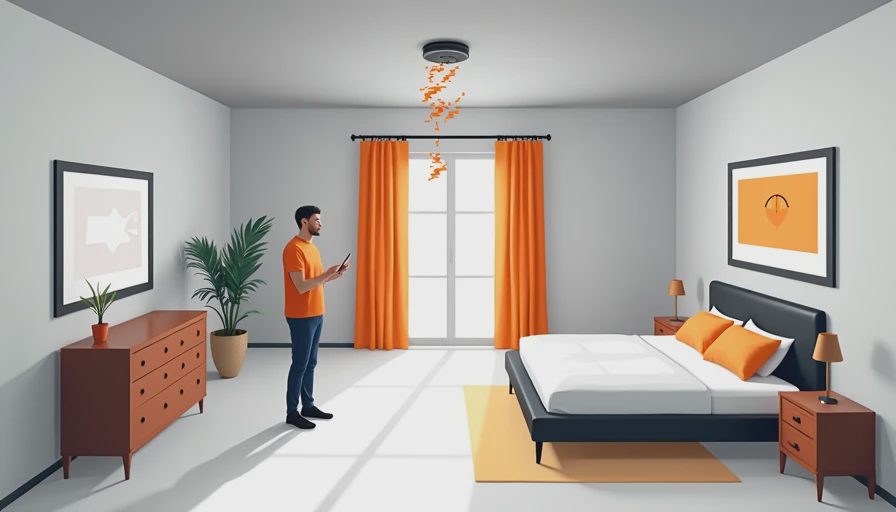
Start by identify the exact alarm. Sound travels through hallways and stairwells, so the detector in the bedroom may not be the one chirping. Stand quietly in each room for a minute, or ask another adult to listen while you check the ceiling units. A phone recording can sometimes help locate a faint chirp.
Next, press the test button. A healthy alarm should produce a loud, sustained alarm sound. Testing is not the same as silencing, so protect your ears and warn children before pressing it. If the unit does not sound, replace it immediately or install a temporary working alarm nearby while you purchase a new one.
For a battery-powered alarm, remove the battery, wait several minutes, then install the replacement. Press the test button again. If the chirp returns, check that the battery door is fully closed and that the battery contacts are clean. Never permanently remove the battery to stop the noise. That turns an annoying warning into an unprotected room.
For a hardwired alarm, turn off the relevant circuit before removing it from its mounting plate. If you are not comfortable working near household wiring, leave the unit in place and ask an electrician or qualified installer for help. A battery-only alarm is safer than attempting an uncertain wiring repair.
When dust, steam, or cooking causes the sound
Smoke alarms are designed to be sensitive, but placement matters. Steam from a bathroom, smoke from a toaster, aerosol sprays, and heavy cooking fumes can trigger nuisance alarms. Repeated false alarms are not a reason to disable the detector. They are a reason to improve the environment around it.
Use a vacuum cleaner with a soft brush attachment to gently clean the openings around the alarm. You can also use short bursts of compressed air if the manufacturer permits it. Do not spray cleaners, paint, insecticide, or water into the unit. Do not cover the detector with tape or a plastic bag while cooking.
If the alarm is directly outside a bathroom or beside a kitchen, its location may be the underlying problem. Smoke alarms should generally be kept away from bathrooms and cooking appliances while remaining near sleeping areas. Follow the installation instructions for your specific model and local requirements. A qualified electrician can reposition a hardwired unit without leaving your family to guess about the wiring.
If beeping from smoke detector began after painting, remodeling, or a dusty project, cleaning may solve it temporarily. However, construction dust can enter the sensing chamber and cause repeated trouble alerts. An older or contaminated detector is usually better replaced than repeatedly reset.
Resetting the alarm without hiding the problem
Most smoke alarms have a test or hush button. Pressing it may silence a nuisance alarm for several minutes, which is useful when toast creates a cloud of smoke. It does not repair a low battery, expired sensor, or electrical fault. If beeping from smoke detector continues after you replace the battery and clean the unit, treat the repeated alert as useful information.
Write down the brand, model, chirp pattern, and date of manufacture. Then look up the manual on the manufacturer's website or contact its support team. Model numbers matter because two alarms from the same brand may use different chirp patterns and reset instructions. Avoid relying on a random video that shows a different design.
Interconnected alarms deserve extra attention. In some systems, one unit detects smoke and causes every alarm in the home to sound. A low-battery chirp may also be heard throughout the system, making the source difficult to locate. Replace batteries or test units one at a time, and keep all alarms installed and connected when finished.
When replacement is the right answer
Replace the alarm if it is around 10 years old, has visible damage, fails its test, or continues beeping after basic troubleshooting. Replacement units often cost roughly $15 to $60, depending on whether they are battery-powered, hardwired, interconnected, or equipped with carbon monoxide detection. That is a small price compared with losing the early warning that gives a family time to leave.
Consider combination smoke and carbon monoxide alarms where appropriate, but remember that carbon monoxide is invisible and odorless. A smoke alarm is not automatically a carbon monoxide alarm. Read the label and install each type according to the instructions. Smart alarms from brands such as Google Nest Protect can provide phone notifications, but a connected feature does not replace a loud local alarm or regular testing.
Dispose of old alarms according to your local waste guidance, especially units with sealed batteries. Do not paint over a replacement or install it where a ceiling fan, vent, or air return could interfere with sensing. Keep alarms near sleeping areas and make sure everyone in the home recognizes the sound.
A family checklist before bedtime
Walk through the home and count the alarms. Check that there is one near each sleeping area and that every level has coverage. Press the test button on each unit, replace weak batteries, and record installation dates in a note on your phone. If a child sleeps through the test, practice waking up, leaving the room, and meeting outside.
Choose an outdoor meeting place, such as the mailbox or a specific tree, and teach children never to go back inside for a toy or pet. Adults can discuss who will help young children and who will call 911. Keep a flashlight near bedrooms in case an alarm sounds during a power outage.
Five minutes now beats five hours later. Beeping from smoke detector is easy to dismiss at midnight, but the chirp is an invitation to fix a small weakness before it becomes a serious one. Start with the battery, check the age, clean carefully, and replace the unit when it no longer gives you confidence.



No notes on this sheet yet.